


A company’s success and expansion are significantly influenced by its human capital. Attracting the right candidates can increase productivity, fuel innovation, and promote long-term stability. However, with several hiring models, deciding on the most appropriate model becomes a make-or-break choice for companies.
Two of the most prevalent hiring models are direct hire and contract-to-hire. Both have their strengths, but the appropriate choice will depend on an organization’s objectives, budget, and talent acquisition strategy.
Let’s look at these models and decide which fits your business needs best.
Understanding Direct Hiring
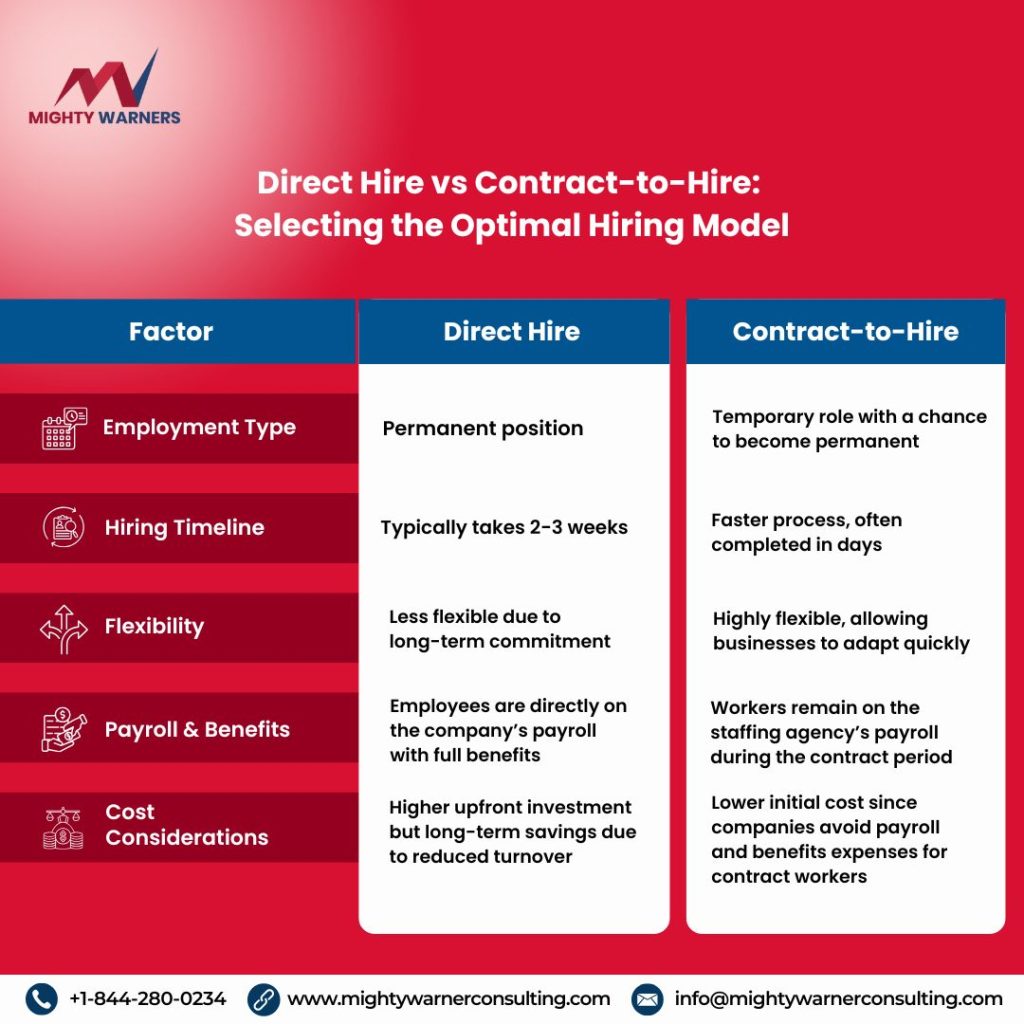
Direct hiring is a process where an applicant is directly employed as a permanent staff member from day one. They are included in the company’s payroll and enjoy all employee benefits like healthcare, retirement schemes, and paid time off. This approach is typically employed for full-time, long-term positions that need a stable and dedicated workforce.
Benefits of Direct Hiring
- Access to Top Talent: Experienced professionals prefer permanent jobs because of the security and benefits involved, making direct hire suitable.
- Less Turnover: Permanent employees will tend to stay longer, thus cutting down on recruitment and training expenditures.
- Better Employee Engagement: As permanent hires are entirely immersed in the company culture, they can contribute to long-term business success.
Direct hiring, however, is a time-consuming and expensive process involving intensive recruitment activities to secure the right person.
Learning Contract-to-Hire
Contract-to-hire is an adaptive hiring model in which prospects work on contract for a fixed duration before becoming permanent employees. This enables companies to gauge performance and cultural compatibility before a long-term commitment.
Advantages of Contract-to-Hire
Quicker Hiring Process: Staffing agencies handle the sourcing and screening, making hiring much quicker.
Workforce Adaptability: Companies can expand and contract their staff according to project requirements without having to commit to permanent staff immediately.
Lower Initial Costs: Contractors are not on the company’s payroll or benefits rolls, keeping initial hiring costs lower.
This structure is especially helpful for companies with unpredictable workloads or those with specific skill requirements for a particular project.
When to Choose Directly Hire
Direct hire is best suited for companies who want to develop a solid, long-term employee base. It is appropriate when:
The job demands highly experienced professionals who seek job security.
Employee retention is essential.
The company is stable financially and prepared to invest in permanent employees.
When to Use Contract-to-Hire
Contract-to-hire is useful when:
A business must hire employees quickly without making permanent hires immediately. There is doubt regarding future business expansion or budget limitations. Specialized skills are required for temporary projects.
Making the Right Hiring Decision
The choice between direct hire and contract-to-hire depends on the organization’s hiring objectives, budget, and long-term strategy. Direct hiring is appropriate for companies looking for stability and long-term growth, while contract-to-hire offers flexibility and a test period for both employer and employee.
A comprehensive assessment of job positions, business needs, and market situations will help identify the optimal recruitment model. Collaborating with a professional recruitment agency can also simplify the recruitment process and provide access to the best candidates.
The Cost Factor: Analyzing Costs
Cost is the decisive factor in hiring. Directly hires involve more significant initial expenditure on recruitment, wages, and benefits. Contract-to-hire positions assist companies in saving on benefits and long-term commitment until they are confident about the candidate’s suitability.
Contract-to-hire could appear cost-effective initially, but companies must analyze likely conversion expenses when the temporary employee becomes permanent. The job and sector determine the cost-effectiveness.
Hiring Speed: Hiring the Best in a Short Time
Time-to-hire is an essential determinant of recruitment. Direct hiring processes are time-consuming because of detailed screening, interviews, and negotiations. On the other hand, contract-to-hire can speed up the hiring process, providing quicker placement while enabling businesses to test individuals in actual situations before fully committing to employment.
Contract-to-hire is a viable option for urgent hiring requirements, whereas direct hire is appropriate for companies willing to take the time to select permanent employees.
Cultural Fit and Staff Retention
Staff retention is a primary concern for companies. Direct-hire candidates will likely fit into company culture better as they get long-term benefits and security. This breeds loyalty and commitment, which in turn breeds better retention.
Conversely, contract-to-hire workers undergo a test period before commitment. Although this minimizes hiring risks, it can affect loyalty because contract workers may continue to seek alternative employment prior to permanent placement.
Industry-Specific Factors
The ideal model of hiring varies based on industry needs.
Technology & IT: Contract-to-hire is common due to changing projects and developing technologies.
Healthcare: Direct hire is utilized for long-term patient care and regulatory consistency.
Finance & Banking: Permanent employment guarantees compliance and trust in financial institutions.
Manufacturing & Engineering: Both systems are implemented according to a project’s needs and the shortage of talent.
Impact on Employer Branding
A solid employer brand attracts the best candidates. Direct-hire employees enjoy company culture, stability, and long-term development opportunities, which boosts the employer’s reputation.
Contract-to-hire allows for a pilot period for workers and employers but can indicate turmoil to potential workers if temporary assignments are over-relied. A balanced employment strategy can maximize employer branding.
The Future of Hiring Trends
The face of the workforce is changing. With remote work, gig economy jobs, and project work, companies are turning to hybrid hiring models. Leadership and core positions still rely on direct hire, but contract-to-hire provides flexibility to react to market needs.
As companies acquire talent, combining direct hiring and contract-to-hire will define recruitment plans in the coming years.
Frequently Asked Questions [FAQs]
1. Is contract-to-hire superior to direct hire?
Contract-to-hire provides flexibility and low up-front cost, which makes it suitable for a short-term project. Direct hire, however, is preferable when companies are looking for long-term stability.
2. How long does a typical contract-to-hire period last?
The three- to six-month range is typical for contract periods, though it may adjust according to employer requirements and employee performance.
3. Do contract-to-hire employees get benefits?
Benefits vary depending on the staffing agency throughout the contract term. After the conversion to full-time, company benefits are provided. Selecting the most suitable hiring model is crucial in workforce planning. By comparing the two alternatives, companies can Align their recruitment processes with their plans.